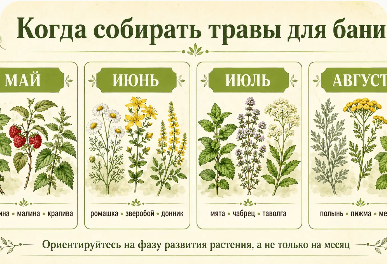
Many dried herbs can be used in sauna bundles, infusions, and aromatic blends.
Quality depends on more than the plant species. Important factors include:
- Correct identification
- Plant maturity
- A clean harvesting location
- Dry weather
- Careful drying
- Proper storage
The main rule is simple: never use an unidentified plant.
Do Not Rely Only on the Calendar
A calendar is only a rough reference. Plants develop earlier in warm climates and later in cool ones. Timing also changes because of:
- Elevation
- Rainfall
- Spring temperatures
- Sunlight
- Local microclimate
Across the United States and Canada, plant growth stage is more useful than the month alone.
Where to Harvest Herbs
Choose clean areas away from:
- Busy roads
- Industrial zones
- Areas where chemicals may have been applied
- Polluted drainage areas
- Trash or contamination
Do not collect on private property without permission. Harvesting may be restricted or prohibited in national, state, provincial, regional, or municipal parks, so always check local rules.
When to Harvest Leaves and Flowering Herbs
Choose fully formed, healthy, evenly colored leaves that are not yet aging. Many aromatic herbs are most noticeable around budding or flowering, but there is no single ideal stage for every species.
Common Herbs and Harvesting Stage
This table concerns aroma and plant maturity only; it is not a medical herbal calendar.
| Plant | What Is Harvested | Growth-Stage Guide | Sauna Format |
|---|---|---|---|
| Mint | Leaves and upper stems | Before or at early flowering | Bundle, infusion, whisk addition |
| Lemon balm | Leaves and upper stems | Before or at early flowering | Bundle, infusion |
| Chamomile | Flower heads | During active flowering | Infusion, blend |
| Thyme | Flowering tops | During flowering | Bundle, blend |
| Lavender | Flowering stems | When most flowers have opened | Bundle, aromatic blend |
| Sage | Leaves and upper stems | Before or at early flowering | Bundle, blend |
| Sweet clover | Flowering tops | During flowering | Bundle, infusion |
| St. John’s wort | Flowering tops | During flowering | Bundle, blend |
| Wormwood | Young upper growth | Before the plant becomes coarse | Small aromatic addition |
| Linden | Flowers | During fresh flowering | Infusion, blend |
Plant-Specific Harvesting Guides
Mint and lemon balm
Collect before or near early flowering, when leaves are developed and aromatic.
Chamomile
Collect fresh flower heads during active flowering; avoid wilted or browned flowers.
Thyme
Cut the upper portion while flowering rather than pulling up the roots.
Lavender
Cut when much of the flower spike has opened while it still holds its shape.
Sweet clover and St. John’s wort
Flowering tops are commonly used, but only with positive identification.
Morning or Evening?
Harvest after morning dew has fully dried, not immediately after rain. Choose a dry day because excess moisture complicates drying and increases mold risk.
How to Cut Herbs
- Use clean scissors or pruning shears.
- Avoid pulling up the entire plant by its roots.
- Leave enough growth for the plant to continue.
- Remove damaged leaves and flowers.
- Do not seal wet herbs in a tight bag.
- Transport material so it does not overheat or become damp.
Drying in Bundles
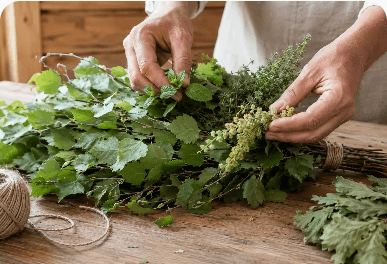
- Make small, loose bundles.
- Do not make them excessively thick.
- Hang in a dry, shaded location.
- Provide good airflow.
- Keep away from intense direct heat.
A very thick bundle may remain damp in the center.
Drying Loose
Spread leaves, flowers, and delicate parts in a thin layer on a clean screen, paper, or suitable drying surface. Leave room for airflow and turn gently when needed.
Why Direct Sun Is Usually Not Ideal
Strong sunlight may dry herbs too quickly, make leaves brittle, change color, and reduce fragrance. Shade and good airflow are usually better.
How to Know When Herbs Are Dry
- Does not feel damp
- Has no musty smell
- Has dry stems and leaves appropriate to the plant
- Shows no mildew
- Still has a clean, recognizable aroma
If a bundle remains damp inside, continue drying.
Storage and Labeling
- In a dry place away from sunlight
- In clean packaging
- Away from strong household odors
- At a stable, moderate temperature
Paper bags, cardboard boxes, or glass jars for completely dry material can work. Label each harvest with plant name, date, and location.
When to Throw Herbs Away
- Mold
- A musty smell
- Unexpected dampness
- Major discoloration
- Insects
- Unknown contamination
If you are unsure about quality, replace the herbs.
Can Herbs Be Dried Inside the Sauna?
Usually this is not ideal. High heat may dry plants too quickly and reduce aroma quality. A dry, ventilated room at moderate temperature is better.
Good sauna herbs begin with correct identification and the right growth stage. Dry weather, careful drying, and protection from moisture help preserve a clean natural fragrance.